Houthi militia attacks on commercial shipping in the Red Sea since November 2023 have disrupted a critical maritime passage for global fuel supply chains, forcing tankers into longer and more costly journeys around Africa and driving up freight rates and insurance costs.
Attacks Force Route Changes
Yemen-based Houthi forces have launched at least 113 separate attacks on commercial vessels in the Red Sea, Bab el-Mandeb Strait, and Gulf of Aden as of March 2025, according to the U.S. Maritime Administration. The attacks have killed four mariners and resulted in one vessel seizure, affecting over 60 nations.
Major oil and natural gas companies avoiding the Red Sea include Equinor, BP, Shell, QatarEnergy, and Reliance, according to the U.S. Energy Information Administration. Vessels that previously passed through the Suez Canal via the Bab el-Mandeb Strait are now routing around southern Africa via the Cape of Good Hope.
Extended Voyage Times
A typical voyage from the Persian Gulf to the Amsterdam-Rotterdam-Antwerp petroleum trading hub via the Suez Canal takes approximately two weeks. The alternative route around Africa adds significant time to the journey, with vessels now spending three to four weeks at sea, according to the EIA.
The Suez Canal handled approximately 12 to 15 percent of global trade volumes in 2023, including 12 percent of seaborne oil, 8 percent of liquefied natural gas, and 8 percent of grain trade, according to a Congressional Research Service report.
Freight and Insurance Costs Surge
Freight rates and insurance costs have increased dramatically due to the extended routes and security risks. War risk insurance pricing for calls to affected areas jumped more than threefold, from 0.25-0.3 percent of a vessel’s value to as much as 1 percent, according to supply chain industry reports.
Oil tanker rates on key shipping routes surged 467 percent in 2025 as the market tightened due to growing crude supply, route disruptions, and sanctions, according to maritime analytics firms. Six very large crude carriers made empty maiden voyages from Asian shipyards in 2025 to pick up crude from alternative routes, compared to just one in 2024.
Military Response
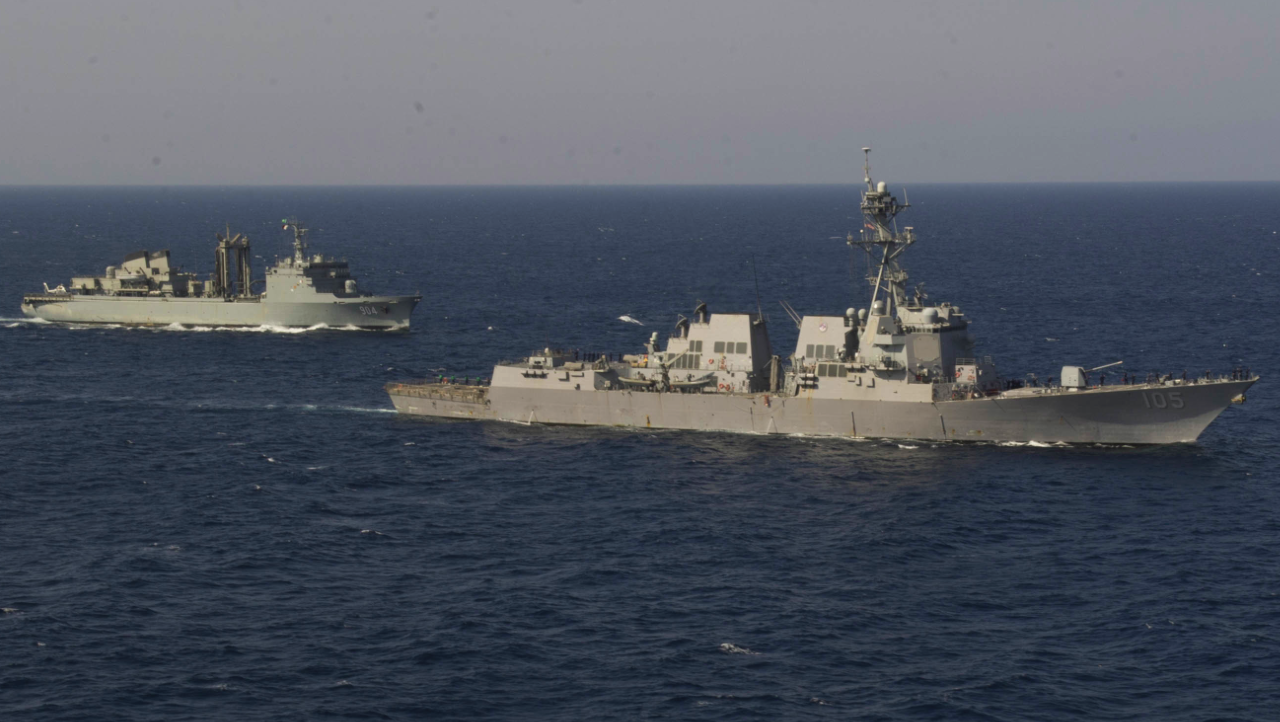
U.S. forces commenced strikes against Houthi targets in Yemen on March 15, 2025, according to Maritime Administration advisories. The strikes targeted facilities used by Houthi forces to launch attacks against commercial and military vessels operating within international shipping lanes.
The U.S. Maritime Administration issued warnings that U.S.-flagged commercial vessels face high risk from terrorism and hostile actions when transiting the southern Red Sea, Bab el-Mandeb Strait, and Gulf of Aden. Potential threats include unmanned aerial vehicle attacks, unmanned surface vehicle attacks, ballistic and cruise missile attacks, small arms fire from small boats, explosive boat attacks, and illegal boardings.
U.S.-flagged commercial vessels operating in these areas were strongly advised to turn off their AIS transponders to reduce targeting risks, unless vessel masters believe doing so would compromise vessel safety.
Strategic Chokepoint Vulnerability
The Bab el-Mandeb Strait, a narrow waterway bordering the Yemeni coast that serves as the southern entrance to the Red Sea, is one of the world’s most significant maritime chokepoints. The strait accounted for 12 percent of seaborne oil trade and 8 percent of liquefied natural gas trade in the first half of 2023, according to the EIA.
The disruptions highlighted the vulnerability of global supply chains to ocean-based security threats and compounded ongoing challenges created by the COVID-19 pandemic, Russia’s war against Ukraine, conflict in the Middle East, and drought conditions that have scaled back shipping through the Panama Canal.
Economic Impact Assessment
Preliminary information suggests the global economic effects of the Houthi attacks have been limited thus far, although they have affected various industries and countries differently through trade linkages including delays and shortages, according to Congressional Research Service analysis.
The disruptions created bottlenecks at the Suez Canal and Bab al-Mandab Strait and presented near-term risks and challenges particularly for the economies of Europe, the Middle East, and the Horn of Africa, according to the CRS report.