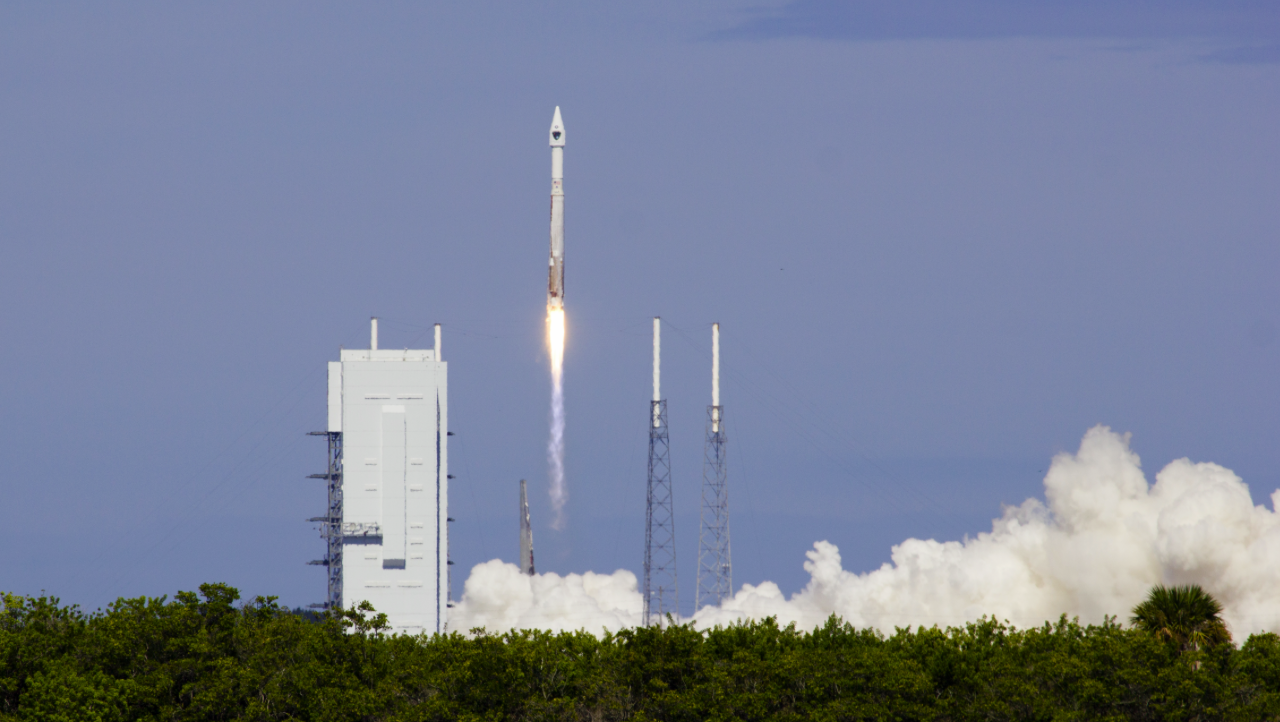
The U.S. Space Force awarded $13.7 billion in launch service contracts to SpaceX, United Launch Alliance, and Blue Origin on April 4, 2025, marking the first time three companies will share responsibility for launching high-priority military and intelligence payloads.
Contract Awards
SpaceX secured $5.9 billion to conduct 28 missions, United Launch Alliance received $5.4 billion for 19 launches, and Blue Origin was awarded $2.4 billion for seven missions, according to Space Systems Command announcements. The contracts cover missions between fiscal years 2025 and 2029 under the National Security Space Launch Phase 3 Lane 2 procurement.
“A robust and resilient space launch architecture is the foundation of both our economic prosperity and our national security,” said U.S. Space Force Chief of Space Operations Gen. Chance Saltzman.
Blue Origin’s First Major Military Contract
Blue Origin’s inclusion represents a significant expansion of the Pentagon’s launch provider base. The company’s New Glenn rocket completed its first flight in January 2025 but has not yet completed the Space Force’s certification process. Blue Origin’s seven launches are scheduled to begin in the program’s second year, contingent on certification.
“Today’s award culminates nearly three years of government and industry partnership to increase launch resiliency and capacity,” said Brig. Gen. Kristin Panzenhagen, program executive officer for assured access to space, in an April statement. “The result is assured access to space for our national security missions, which increases the military’s readiness.”
Expanded Launch Requirements
The Space Force expects to launch 84 missions between fiscal 2027 and 2032, nearly double the number flown in the previous five years. The Lane 2 portion of Phase 3 focuses on complex launches to high-energy orbits with enhanced mission assurance requirements, such as secure communications satellites and reconnaissance platforms.
The Pentagon adopted a two-lane strategy for this procurement. Lane 1 targets commercial-like missions and is open to newer providers including Stoke Space and Rocket Lab. Lane 2, awarded in April, is reserved for companies whose rockets meet more stringent security and performance requirements.
Launch Infrastructure Expansion
To accommodate growing demand, the Space Force is exploring partnerships with spaceports beyond its primary ranges at Cape Canaveral Space Force Station in Florida and Vandenberg Space Force Base in California. Annual launch rates at the two facilities have increased from fewer than 20 missions in 2020 to a projected 220 in 2025, according to Space Systems Command.
Lt. Gen. Phillip Garrant, head of Space Systems Command, told reporters in October 2025 that the service is considering partnerships with facilities in Texas, Virginia, and other states to prioritize heavy and super heavy rockets at the Cape and Vandenberg while moving smaller launches to alternative sites.
Strategic Context
The contract awards reflect the Pentagon’s emphasis on assured access to space as launch demand accelerates. The Space Force requires reliable launch capacity to deploy satellites for missile warning, secure communications, GPS navigation, and intelligence collection missions critical to national security operations.
SpaceX and ULA have served as the Space Force’s primary launch providers since 2020 under the previous National Security Space Launch Phase 2 contract. The addition of Blue Origin introduces a third provider to increase competition and reduce dependence on any single company for critical national security launches.