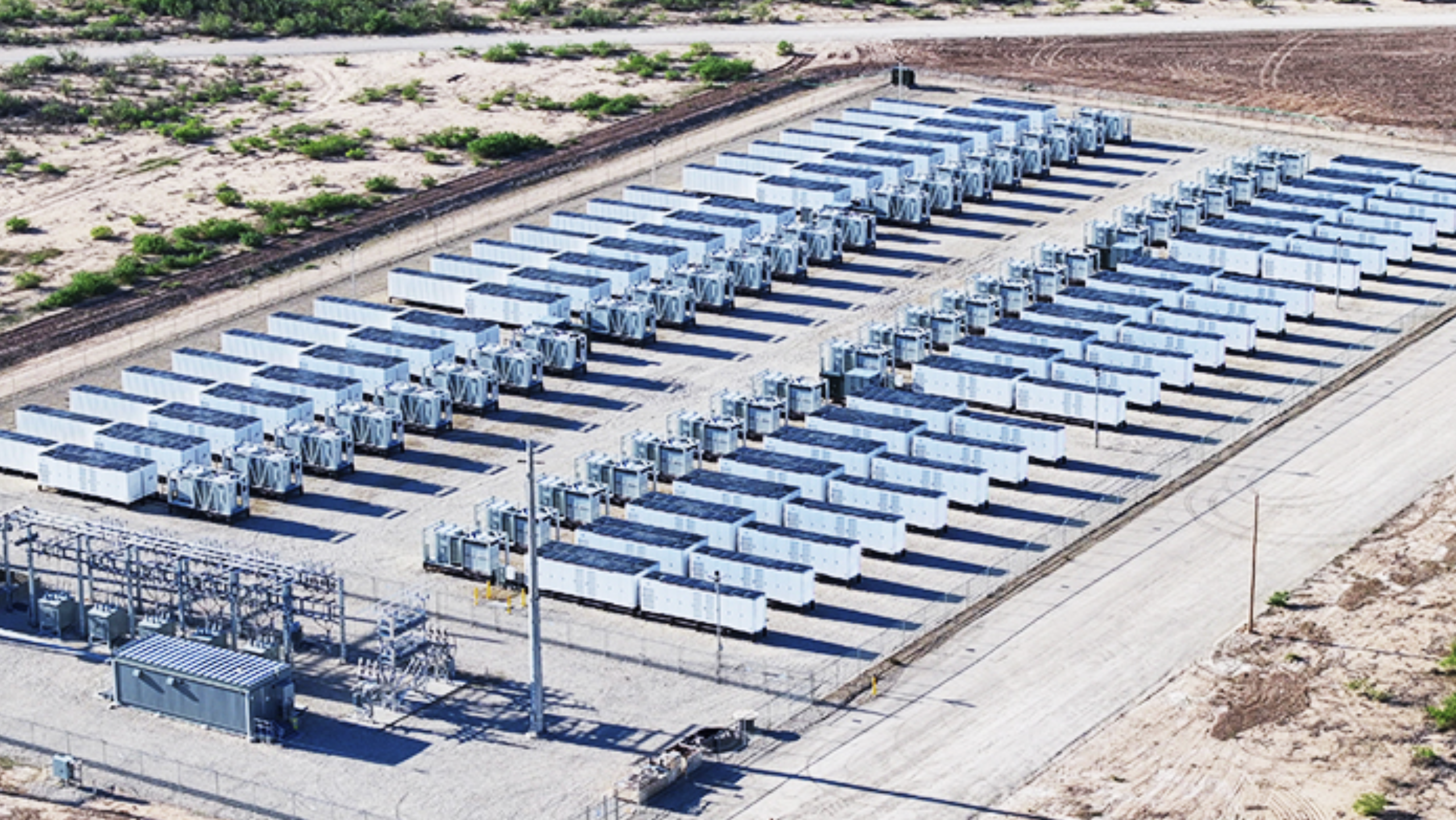
Texas’ power grid is expected to be more resilient this winter as a growing fleet of battery storage projects comes online, reducing the risk of outages during periods of peak cold-weather demand, according to the Electric Reliability Council of Texas.
Grid officials say the expansion of storage capacity—despite performance challenges batteries face in low temperatures—makes an energy emergency less likely in early 2026 than during last winter, when operating reserves were tighter. We reached out to ERCOT for additional comment.
What We Know
- ERCOT told board members at its December meeting that additional battery storage capacity is improving winter reliability, particularly during early morning hours when electricity demand is harder to meet.
- In its most recent resource adequacy report, ERCOT modeled battery availability during December 2024, as well as during Winter Storms Cora, Enzo and Kingston in 2025.
- The analysis found an energy emergency is less likely in January 2026 than in December 2025, largely because more battery storage projects are expected to be connected to the Texas grid.
- Like gas turbines, battery systems face operational challenges in cold weather, as low temperatures slow internal chemical reactions and reduce discharge capability.
- ERCOT said its winter risk modeling accounts for batteries operating at a lower state of charge, but still shows that the influx of new storage facilities helps guard against winter emergencies.
- Since Winter Storm Uri in February 2021, ERCOT and state regulators have implemented winterization requirements for power plants, with similar standards now applied to battery storage systems.
- Energy storage facilities are inspected by ERCOT at least once every three years. The grid operator has evaluated more than 3,300 power plants and transmission facilities since launching the inspection program.
- ERCOT identifies several battery-site components as vulnerable during extreme cold, including thermal management systems, inverters, fire suppression equipment and heating and air conditioning units.
What’s Being Said
- Adam Nygaard, vice president of business development at FlexGen, said keeping batteries within optimal temperature ranges reduces degradation and capacity loss.
- Nygaard said FlexGen uses software to create a “digital twin” of each storage site, allowing operators to compare expected performance against real-world outcomes and take corrective action when deviations appear.
- FlexGen-supported systems recorded 99.3 percent uptime during Winter Storm Uri, according to Nygaard.
- John Murray, principal analyst on renewables at S&P Global Energy, said cold weather can limit how much electricity batteries are able to discharge during winter peaks, potentially affecting revenue.
- “Winter price spikes in ERCOT are shorter, more chaotic and often tied to sudden generator outages,” Murray said, adding that multi-day winter events can make it difficult for batteries to recharge as solar output declines and wind generation becomes less reliable.
Why It Matters
Battery storage is increasingly central to Texas’ strategy for meeting rising electricity demand while managing extreme winter weather risks. Even with cold-weather performance limits, the rapid buildout of storage capacity is reshaping how ERCOT manages grid reliability in a power system that remains largely isolated from the rest of the U.S.
What Happens Next
- Developers continue racing to connect new battery projects to ERCOT’s grid.
- Of 1,999 pending generation interconnection requests totaling 432 gigawatts, nearly 41 percent are energy storage projects, according to ERCOT data.
- Grid officials are expected to continue winter inspections and resource modeling ahead of the 2025–26 winter season to determine whether new storage additions translate into measurable reliability gains.
Background / Context
Unlike most U.S. power markets, ERCOT does not operate a capacity market and pays generators only when electricity is actually delivered. That structure increases financial risk for battery developers during winter storms, when limited solar output, volatile wind generation and the inability to import power from neighboring grids complicate both grid operations and revenue forecasting.