U.S. military installations in Texas have deployed microgrid systems to enhance energy resilience and maintain operational capability during grid outages, as part of a broader Army initiative to install microgrids at installations worldwide by 2035.
Fort Cavazos Microgrid
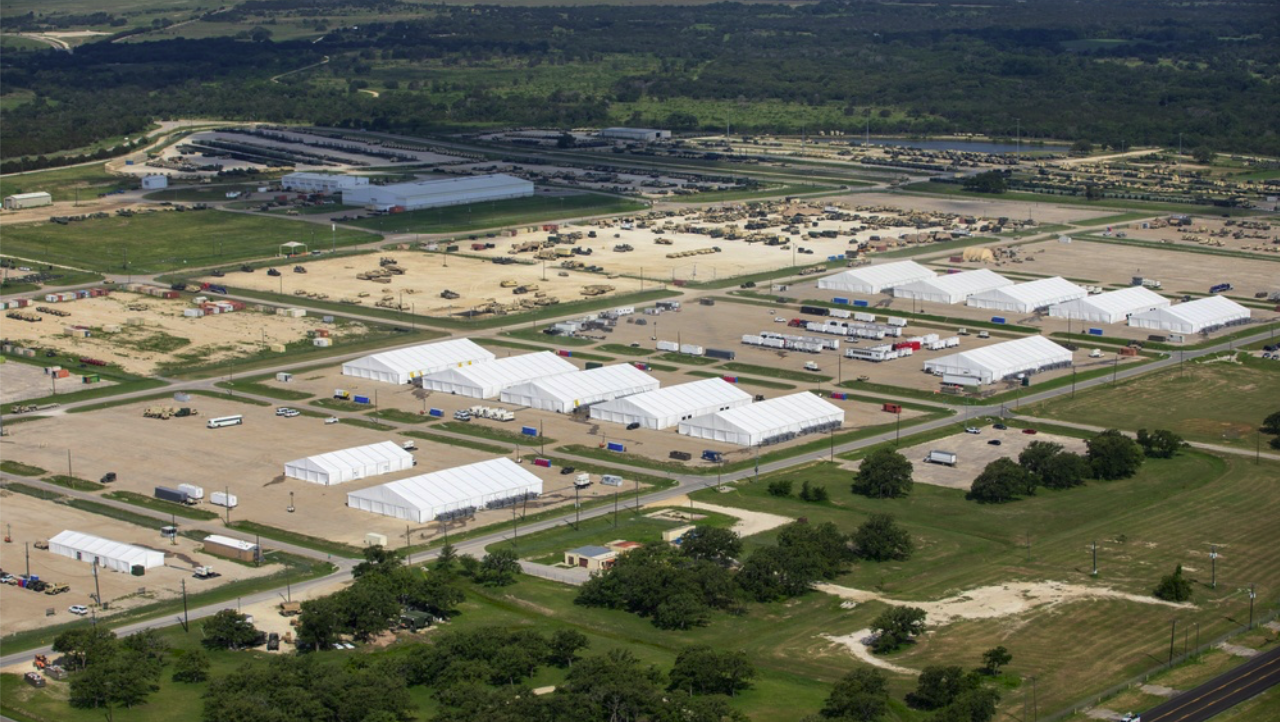
U.S. Army Garrison-Fort Cavazos, formerly known as Fort Hood, launched an intelligent sustainability and restoration microgrid in March 2024 in conjunction with the city of Temple, Texas, and Dominion Energy, according to Microgrid Knowledge. The installation, located between Austin and Waco, is one of the largest U.S. military bases in the world at 340 square miles.
The microgrid can island, or disconnect from the electric grid during an outage, providing a minimum of 14 days of operational capability for 43 different facilities in the western part of Fort Cavazos, according to Army reports. Among the facilities that can be powered are barracks, dining facilities, and the Robert Gray Army Airfield.
“The microgrid and the resilience it provides will be key to maintaining the readiness of Fort Cavazos,” said Lt. Gen. Sean C. Bernabe, III Armored Corps and Fort Cavazos commander.
The system successfully demonstrated its islanding capability in November 2021, when the microgrid sustained electric operations at the airfield independently from the utility grid, according to Energy Tech. The on-base microgrid utilized solar power, energy storage and on-site power generators which, with control systems, can provide uninterrupted power for extended periods.
Joint Base San Antonio
The Defense Logistics Agency implemented a self-funding energy security and resiliency infrastructure project at Joint Base San Antonio in Texas, according to Ameresco. The project integrates on-site renewable energy generation, battery energy storage, and microgrid technologies allowing for seamless transition to backup power to maintain operation of critical loads.
The project encompasses more than 14.7 million square feet of buildings across five military installations and includes a microgrid integrating 18.5 megawatts of new onsite photovoltaic assets, 4 megawatts of gas-fired backup generation, and 9 megawatt-hours of battery storage. The improvements are designed to reduce energy consumption by 24 percent annually, generating $8.7 million in annual energy savings.
The microgrid provides automated islanding from commercial power grid during periods of interruption and critical building resiliency during utility outage or grid disruption.
Fort Hood Nuclear Consideration
Fort Hood has been named as one of nine military installations under consideration for microreactor power plants, according to Army announcements in November 2025. The consideration reflects the military’s exploration of advanced nuclear technologies to enhance base energy security and resilience.
Texas State Microgrid Initiative
The Texas Legislature approved $1.8 billion in funding for the deployment of microgrids across critical facilities statewide, according to the University of Houston. The Texas Backup Power Package Program will support development of small-scale, on-site energy systems combining solar, battery storage and gas-fired generation at essential locations including hospitals, water treatment plants, nursing homes, and police and fire stations.
The program is designed to bolster grid reliability and mitigate risks associated with power outages caused by extreme weather events such as Winter Storm Uri in 2021 and Hurricane Beryl in 2024.
Army Climate Strategy
The U.S. Army aims to have a microgrid at each of its installations worldwide by 2035, according to its 2023 climate strategy. The Army is using microgrids to increase energy independence and resilience at its bases while also reducing energy costs and carbon emissions.
The Department of Defense continued its microgrid deployment with three new projects announced in September 2024, including a fully renewable microgrid at Fort Hunter Liggett in California that operates without carbon-based energy sources such as diesel generators.