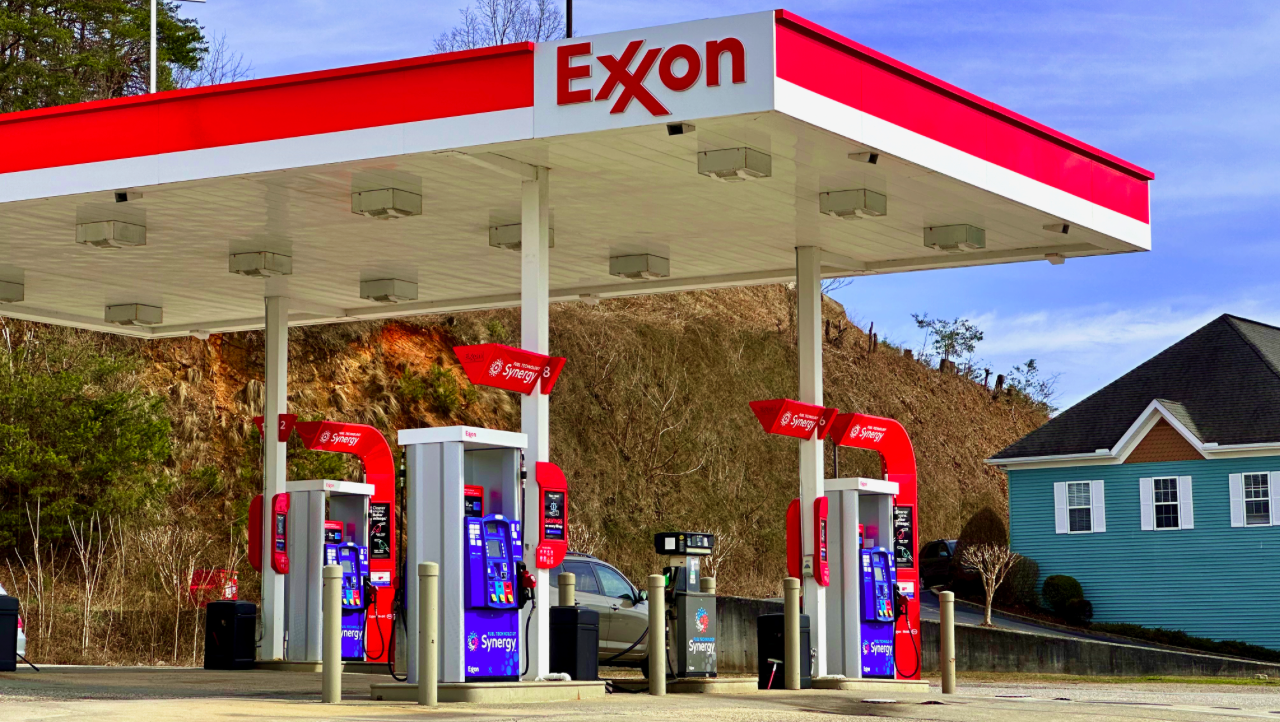
ExxonMobil paused plans to build what would have been one of the world’s largest hydrogen production facilities at its Baytown, Texas complex in November 2025, citing weak customer demand and economic uncertainty.
Project Suspension
CEO Darren Woods announced on November 21, 2025, that the company has suspended the multi-billion-dollar project, according to Reuters. The decision reflects broader challenges traditional energy firms face in transitioning profitably to cleaner-energy initiatives.
“We remain convinced that one, it will be required, and two, we’ll be able to access the customers and the market,” Woods said. However, potential customers remain hesitant due to the higher cost associated with using hydrogen produced with carbon capture technology.
The company and its partners, including Abu Dhabi National Oil Company, have invested about $500 million into the project so far, according to Egypt Oil & Gas.
Original Project Scope
The proposed facility, unveiled in January 2022, was designed to produce 1 billion cubic feet per day of blue hydrogen at ExxonMobil’s refining and petrochemical complex in Baytown. Blue hydrogen is produced from natural gas, with the resulting carbon dioxide captured and stored underground.
The facility was expected to capture over 98 percent of the associated CO2 emissions and safely store them underground, according to ExxonMobil’s original announcement. The project was targeting start-up in 2027-2028, according to gasworld.
Portions of the blue hydrogen were set to be converted into ammonia for international offtake markets. In 2024, Japanese majors Jera and Mitsubishi said they were exploring deals to buy volumes.
Market Challenges
Woods explained that an industrial slowdown and economic uncertainty in Europe have exacerbated the demand challenge, according to Enerdata. The CEO cited difficulties in establishing committed customers willing to provide off-take contracts for the fuel.
The project pause reflects declining confidence in the blue hydrogen sector as economic conditions have been affected by federal policy shifts, according to Enverus Intelligence Research. The One Big Beautiful Bill Act, signed on July 4, 2025, narrowed timelines and overhauled incentives under the Inflation Reduction Act, including the 45V clean hydrogen production tax credit.
Enverus had previously identified the Baytown project as one of the most cost-effective blue hydrogen developments in North America.
Industry Context
Market demand for clean hydrogen is weakening, with major players increasingly withdrawing from similar initiatives. BP abandoned its planned H2 Teesside blue hydrogen plant in the United Kingdom in December 2025, citing deteriorating industrial demand.
The Baytown facility would have been ExxonMobil’s first world-scale plant for production of low-carbon hydrogen, according to the company’s 2023 announcement. The hydrogen was intended to reduce greenhouse gas emissions from ExxonMobil’s own operations in support of its net-zero 2050 ambition.
Alternative Hydrogen Technologies
Despite pausing the blue hydrogen project, ExxonMobil and BASF announced in November 2025 a partnership to advance low-emission hydrogen through methane pyrolysis technology, according to ExxonMobil’s newsroom. A demonstration plant is planned in Baytown to validate the technology at scale.
Methane pyrolysis produces hydrogen and solid carbon without requiring carbon capture and storage infrastructure.
Future Prospects
Woods confirmed the project could be restarted once market conditions improve and demand strengthens, according to multiple reports. The company maintains that the facility will eventually be required to meet future hydrogen demand.
The Baytown refining and chemicals complex remains one of ExxonMobil’s largest integrated manufacturing sites along the Texas Gulf Coast. The facility includes petroleum refining, chemical production, and petrochemical manufacturing operations.