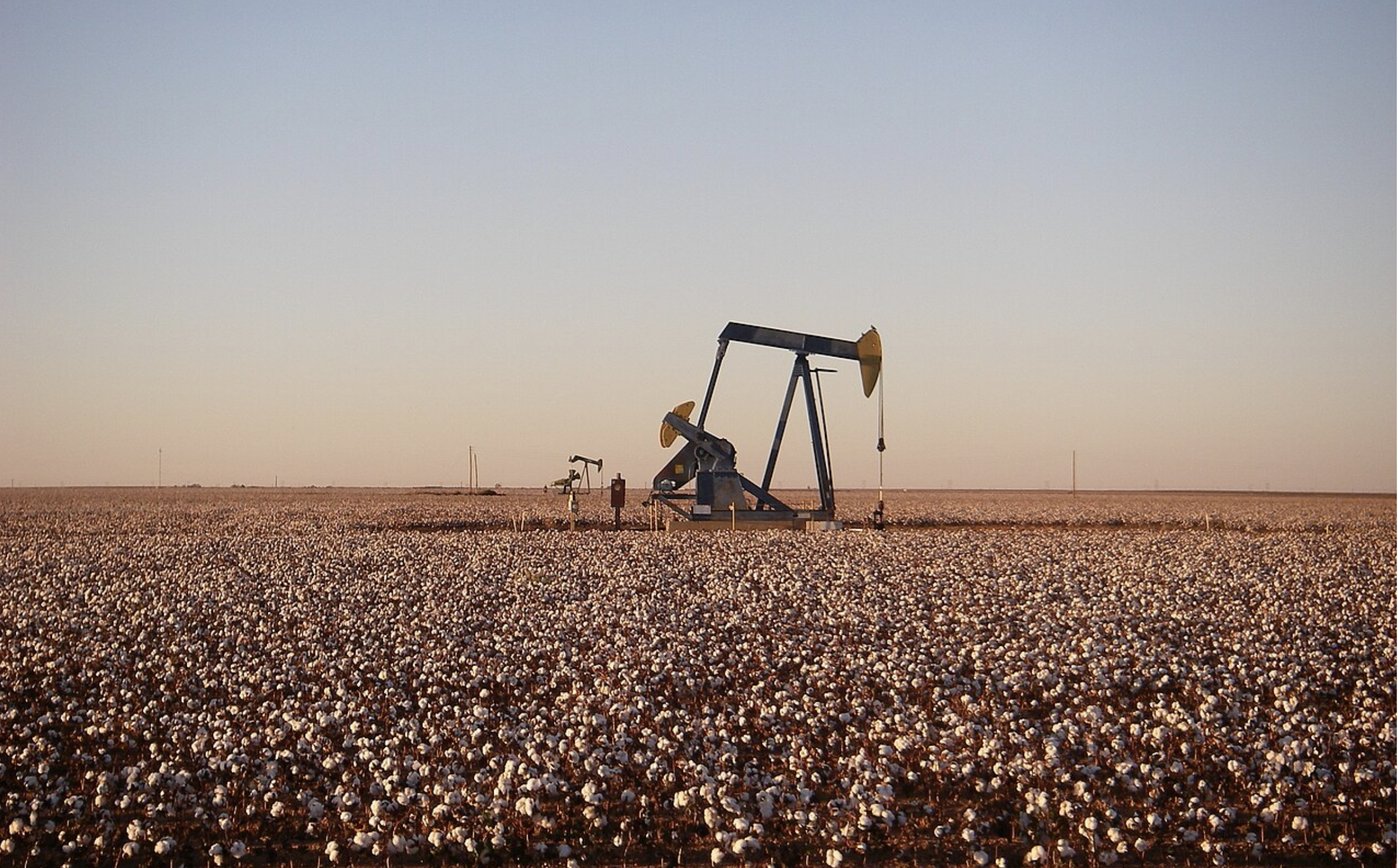
Oil production in the Permian Basin reached 6.5 million barrels per day in the fourth quarter of 2024, marking a significant milestone for the region that spans West Texas and southeastern New Mexico and cementing its position as the world’s most productive oil field.
Production Growth
The Permian Basin’s oil production grew to 6.5 million barrels per day in the fourth quarter of 2024, according to the Federal Reserve Bank of Dallas. Production increased 1.3 percent compared to the third quarter of 2024 and was up 5.7 percent year over year.
The milestone represents continued expansion despite a declining rig count. The average number of active rigs in the Permian declined 1.6 percent year over year, though the number of new wells drilled has remained relatively stable.
Geographic Concentration
Ten counties in the Permian Basin accounted for 93 percent of U.S. oil production growth between 2020 and 2024, according to the U.S. Energy Information Administration. Total U.S. crude oil and lease condensate production grew by 1.9 million barrels per day during that period.
Lea and Eddy counties in New Mexico accounted for nearly 1.0 million barrels per day of U.S. production growth, representing 52 percent of the national increase. Martin and Midland counties in Texas contributed an additional 400,000 barrels per day, or 21 percent of growth.
Six additional Texas counties—Andrews, Glasscock, Howard, Loving, Reagan, and Ward—together grew by 360,000 barrels per day, representing 19 percent of national production growth.
Crude oil and lease condensate production in these ten counties averaged 4.8 million barrels per day in 2024, accounting for 37 percent of total U.S. production.
Key Formations
The primary geologic formations responsible for production growth are the Bone Spring, Spraberry, and Wolfcamp formations, according to the EIA. These formations have been the main sources of oil production growth across the Permian Basin and the United States.
The Permian Basin is a large geologic feature underlying 66 counties in New Mexico and Texas. The region contains more than 7,000 oil and gas fields, according to the Texas Railroad Commission.
Productivity Gains
Although the rig count declined, production continued to grow due to increased drilling productivity. The number of new wells drilled remained relatively stable, suggesting operators are achieving higher output per rig through improved drilling and completion techniques.
The Permian Basin accounts for 44 percent of U.S. crude oil production and 17 percent of U.S. natural gas production, according to federal data cited in multiple sources.
Regional Economic Impact
The Midland-Odessa region, the economic center of the Permian Basin, experienced 1.2 percent annualized job growth between September and December 2024, according to the Dallas Fed. The unemployment rate averaged 2.9 percent during the fourth quarter, with average hourly earnings of $34.34.
West Texas Intermediate crude oil prices averaged $71.72 per barrel at the end of the fourth quarter 2024, representing a 5.2 percent increase compared to the third quarter.
National Context
Texas accounted for 43 percent of total U.S. crude oil production in 2024, producing over two billion barrels during the year, according to the U.S. Energy Information Administration. New Mexico ranked as the second-largest producing state with 744.6 million barrels.
U.S. crude oil production reached 13.853 million barrels per day in early December 2025, sitting just 9,000 barrels per day below the all-time high, according to EIA data.
Outlook
The Permian Basin rig count stood at 249 as of December 12, 2025, down 55 rigs from the previous year, according to Baker Hughes. Despite the declining rig count, production has continued to expand due to improved drilling efficiency and well productivity.
The Energy Information Administration forecasts U.S. crude oil production will average 13.5 million barrels per day in 2026, about 100,000 barrels per day less than 2025 levels, marking the first production decline after four consecutive years of growth.