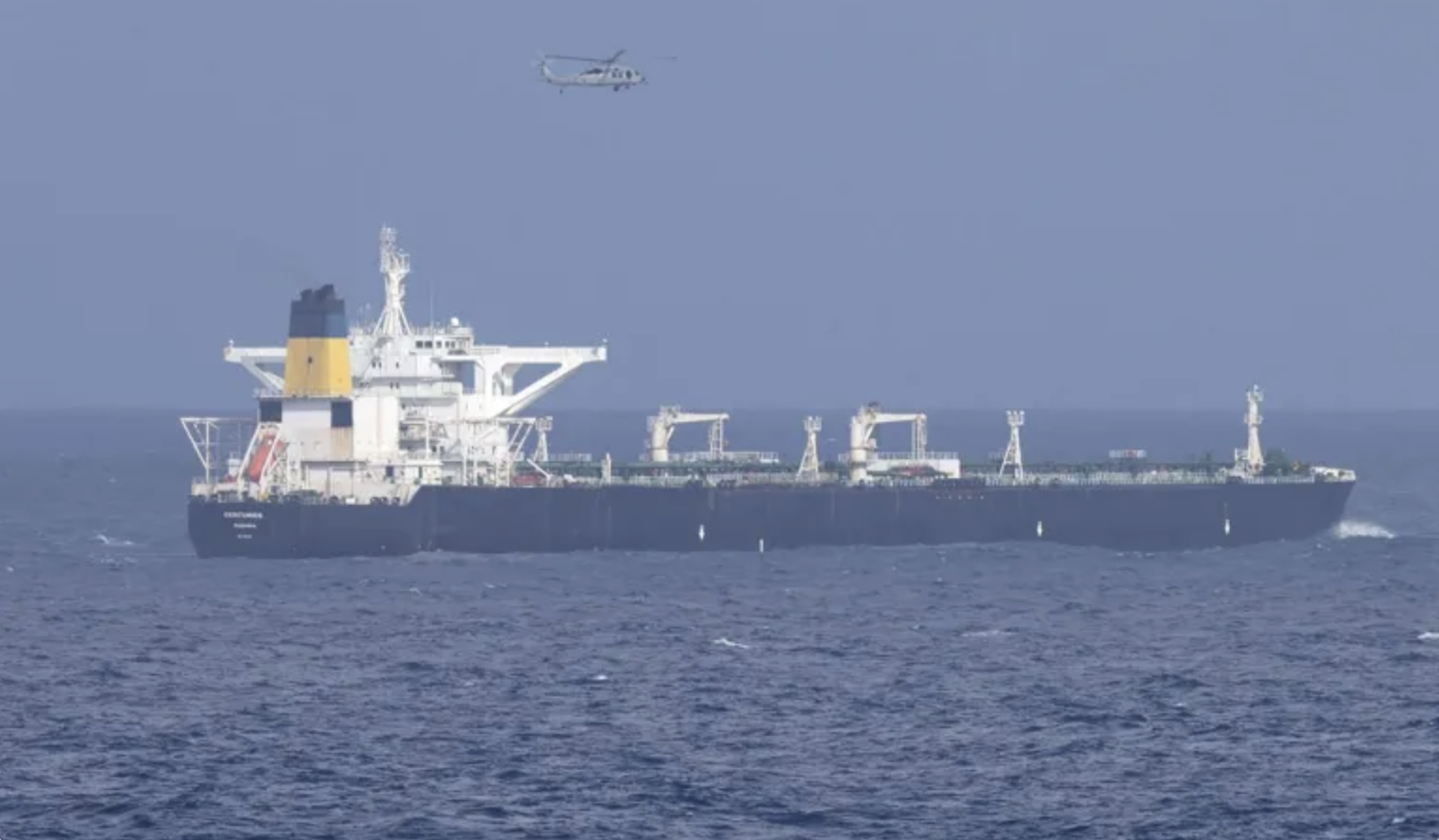
The United States has intercepted an oil tanker in international waters off the coast of Venezuela, U.S. officials said Saturday, marking the second such action in recent weeks as Washington escalates enforcement against vessels carrying sanctioned Venezuelan crude. The interception follows President Donald Trump’s announcement of a “total and complete blockade” of sanctioned oil tankers entering and leaving Venezuela. We reached out to the White House and the U.S. Coast Guard for comment.
The incident comes amid a broader U.S. military build-up in the Caribbean region and renewed pressure on the government of Venezuelan President Nicolás Maduro, according to reporting by Reuters.
Why It Matters
Venezuela remains one of the world’s largest oil reserve holders and a key supplier to China, making U.S. enforcement actions against oil shipments geopolitically significant. Intercepting tankers in international waters raises legal, diplomatic and market questions, particularly as global oil prices remain sensitive to supply disruptions.
The move also underscores the Trump administration’s expanded use of sanctions and military pressure to restrict revenue flows to governments it designates as hostile, with implications for maritime security and international law.
What To Know
U.S. Homeland Security Secretary Kristi Noem confirmed that the Coast Guard intercepted a tanker that had recently docked in Venezuela, saying the U.S. would continue to pursue “the illicit movement of sanctioned oil,” according to a statement she posted on X.
White House spokeswoman Anna Kelly said the tanker was carrying sanctioned oil and described it as a falsely flagged vessel operating as part of Venezuela’s so-called “shadow fleet,” which U.S. officials say is used to traffic oil and fund the Maduro government.
Venezuela’s government condemned the interception as a “serious act of international piracy,” saying the seizure and the disappearance of the crew would be reported to the United Nations Security Council and other multilateral bodies, according to a statement released by Caracas.
British maritime risk firm Vanguard identified the vessel as the Panama-flagged Centuries, intercepted east of Barbados in the Caribbean Sea. Shipping analysts said the tanker is believed to be part of the dark or shadow fleet used to transport Venezuelan crude under deceptive practices.
According to data from TankerTrackers.com, more than 70 tankers currently operating in Venezuelan waters are linked to the shadow fleet, with at least 38 under U.S. Treasury sanctions. At least 15 of those vessels are fully loaded with crude or fuel.
Internal documents from Venezuela’s state oil company PDVSA show that the Centuries was carrying roughly 1.8 million barrels of Merey crude bound for China after loading under a false name, according to Reuters.
Explicit caveat: While U.S. officials say the tanker was transporting sanctioned oil, legal experts note that the vessel itself has not been formally designated by the U.S. Treasury, raising unresolved legal questions about the scope of enforcement authority in international waters.
What People Are Saying
Kristi Noem, U.S. homeland security secretary, said in a statement posted on X: “The United States will continue to pursue the illicit movement of sanctioned oil that is used to fund narco terrorism in the region. We will find you, and we will stop you.”
Jeremy Paner, partner at Hughes Hubbard & Reed and former OFAC investigator, told Reuters that the vessel itself has not been sanctioned, calling the interception “a further increase in Trump’s pressure on Venezuela.”
The Venezuelan government said in its statement that it “denounces and rejects the theft and hijacking of a new private vessel transporting oil,” characterizing the action as a violation of international law.
What Happens Next
U.S. officials have indicated that enforcement actions against sanctioned oil shipments will continue as part of the blockade announced earlier this week. Venezuelan authorities say they will formally raise the interception at the United Nations, while energy markets are watching whether the disruption of Venezuelan exports persists long enough to affect global oil prices.